
Sakibul Hasan
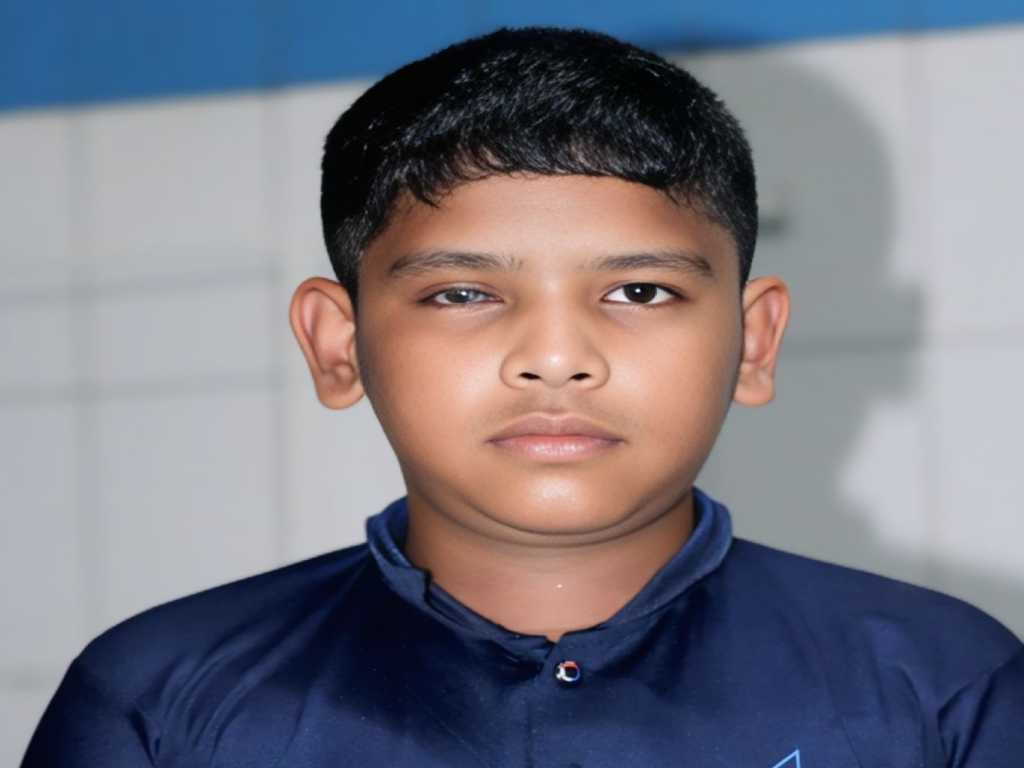
- Sakibul Hasan
- 30145
- A
- 383
- 12 years old
- Class 4 student
- 4 members
- Jhenaigati, Sherpur, Bangladesh
A Brief Background and His Experience During the July 2024 Uprising
On the afternoon of 19 July 2024, 12-year-old Sakibul Hasan was doing what countless children do during their school holidays, playing outside with a friend near ECB Chattar in Dhaka Cantonment.
Within moments, an ordinary afternoon became the day that would change his life forever.
A stray bullet struck Sakib in his right eye.
Terrified and confused, he didn’t run for help. Instead, he quietly made his way home. He was frightened, not only because he had been hurt, but because he thought his mother might scold him for getting caught up in the violence. Hoping to hide the injury, he removed his T-shirt, covered his eye, and lay silently on the bed.
When Sabina returned home after a long day working as a domestic caregiver, Rakib, Sakib’s younger brother, immediately told her that his brother had been shot. But Sakib insisted it wasn’t true. He told her another boy had punched him during a fight. Sabina believed Sakib because in her mind she thought if someone is shot, they die.
Later that night she realized Sakib’s eye needed medical attention because it was bleeding and swelling. She had no money in hand, so she borrowed a small amount of money from a neighbor and rushed him to a local doctor. There, reality became unavoidable.
The doctor examined Sakib and told her there was a bullet injury to his eye. He urged her to take her son to a specialized eye hospital immediately. But that night she didn’t know how to manage a hospital visit.
The following day, the family she worked for arranged for Sakib to be taken to Islamia Eye Hospital. Doctors there explained that he required emergency surgery but referred him to the National Institute of Ophthalmology and Hospital (NIOH), where the operation could be performed free of charge.
Because Sakib had already eaten, surgery had to be postponed until the following morning. After undergoing emergency surgery at NIOH, another challenge quickly emerged. Sabina could not afford to remain at the hospital around the clock. As the family’s only dependable source of income, she still had to work to provide for her two sons. Yet at NIOH, Sakib was too young to be left alone and needed someone by his bedside.
Through the kindness of the family she worked for, arrangements were made to transfer Sakib to Combined Military Hospital (CMH), where Sabina had an important advantage. As a home attendant who cared for patients after their discharge from CMH, she was already familiar with the hospital and knew many of the staff. She felt comfortable leaving Sakib in their care while she continued working during the day, returning to visit him whenever she could. Sakib remained at CMH for nearly two months, receiving ongoing treatment and close monitoring.
Despite the dedicated efforts of specialists at both NIOH and CMH, the injury to Sakib’s right eye proved irreversible. Doctors repeatedly explained that the damaged eye could not be saved and would eventually need to be removed to protect the health of his remaining eye. Approximately six months after the injury, surgeons removed his right eye and later fitted him with a prosthetic eye.
At just twelve years old, his childhood had changed forever.
Rehabilitation Journey and the Support Provided by Aparajito 24 Foundation
The surgery marked the end of Sakib’s emergency medical treatment, but it was only the beginning of his rehabilitation. Recovering from the loss of an eye required more than medical care. It meant helping a young boy regain confidence, continue his education, and grow up in a family with the stability to support his future.
After meeting Sakib and his family, Aparajito 24 Foundation conducted a comprehensive assessment to better understand their long-term needs. While Sakib’s medical care remained important, it quickly became clear that the family’s greatest challenge was economic insecurity. Sabina was the sole dependable provider for her two sons, earning a modest and unpredictable income as a home attendant caring for patients after they returned home from the hospital.
To create a more sustainable future, Aparajito 24 helped Sabina establish a small village general store with an attached tea stall. Rather than simply providing financial assistance, the Foundation purchased the shop’s inventory, helped set up the business, and worked alongside the family to create a source of long-term income. The shop quickly became a promising new beginning. For the first time, Sabina could envision earning a living close to home while allowing Sakib to continue his education in a more stable environment.
The shop was located on the same property as the family home, allowing Sabina to remain close to her sons throughout the day instead of leaving them alone for long hours while she worked in Dhaka. She treasured the opportunity to watch over them, prepare meals, and be present during a period when Sakib needed his mother’s support more than ever. Returning to the village also meant Sakib could spend time with his grandfather, with whom he shared a particularly close bond, giving him an added sense of comfort and belonging as he adjusted to life after losing an eye.
Unfortunately, circumstances beyond Sabina’s control interrupted that progress. The shop had been established on land belonging to Sabina’s parents, and a dispute arose when her brother objected to her operating a business there. Faced with uncertainty over the property, Sabina made the difficult decision to close the shop and return to Dhaka, where she resumed working as a home attendant to provide for her children.
Although the family’s circumstances changed, Aparajito 24’s commitment did not. The Foundation has remained beside Sakib and his family, recognizing that rehabilitation is rarely a straight path. As families encounter new challenges, support must adapt to meet them where they are.
Current Situation and Future Aspirations
Today, Sakib is 14 years old and preparing to enter fourth grade. Although his injury interrupted his education, he has returned to school and continues moving forward with quiet determination.
Outside the classroom, he is much like any other boy his age. He loves playing football with his friends, especially when it rains. His mother smiles as she describes how he will stay outside for hours, happily playing in the rain despite everything he has been through.
Because Sabina often works long shifts, Sakib and his younger brother, Rakib, have learned to care for themselves in small but meaningful ways. They can cook rice, fry fish and eggs, and prepare simple meals like aloo bharta while waiting for their mother to return home. These everyday responsibilities have made both boys more independent than most children their age.
Like many children living with a visible disability, Sakib also faces emotional challenges. Sometimes children in the neighborhood call him Kana, and those moments still bring him to tears. Yet they have not taken away his kind and generous nature. Sabina says her son has many friends and loves sharing whatever food they have at home with them. Even after everything he has endured, he remains a cheerful child who enjoys being surrounded by others.
Sabina continues to carry the responsibility of supporting her family with extraordinary determination. Although she lives from one caregiving assignment to another, she has carefully protected nearly all of the financial assistance Sakib received following his injury. She uses only what is necessary for his immediate needs and saves the rest for his future, believing that one day those savings will help provide opportunities that would otherwise be out of reach.
She also continues to hold onto another dream: purchasing the small piece of family land where her village shop once stood so she can reopen the business and build a more secure future for her sons.
Aparajito 24 Foundation remains committed to walking alongside Sakib and his family as that future unfolds. The Foundation understands that true rehabilitation does not end when a patient leaves the hospital. It is a long-term journey of restoring dignity, opportunity, confidence, and hope.
Today, when the rain begins to fall, Sakib still runs outside to play football with his friends. Watching him laugh across a muddy field, it is easy to see not only the boy who survived a devastating injury, but also the child he still has every chance to become. That is the true measure of rehabilitation, not simply helping a child survive tragedy, but helping him continue to dream, grow, and believe that his future remains full of possibility.